

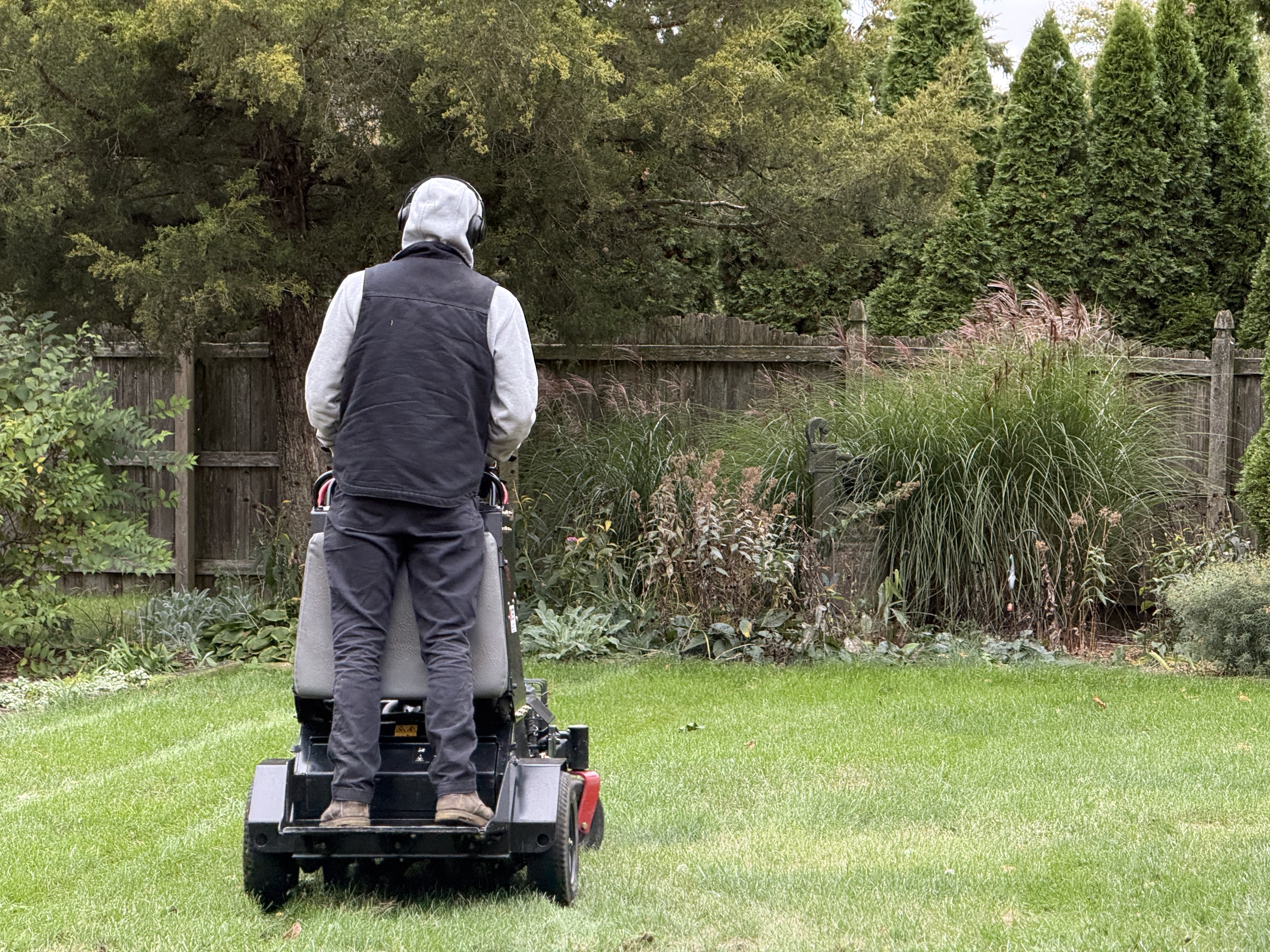
A healthy lawn starts below the surface. Even when your grass looks good from the top, the soil underneath can become heavily compacted over time. Foot traffic, lawn equipment, weather, pets, and normal use of the yard can slowly press soil particles together. Core aeration helps relieve that compaction and gives your lawn the opportunity to breathe, absorb water, and develop stronger roots.
What Is Core Aeration?
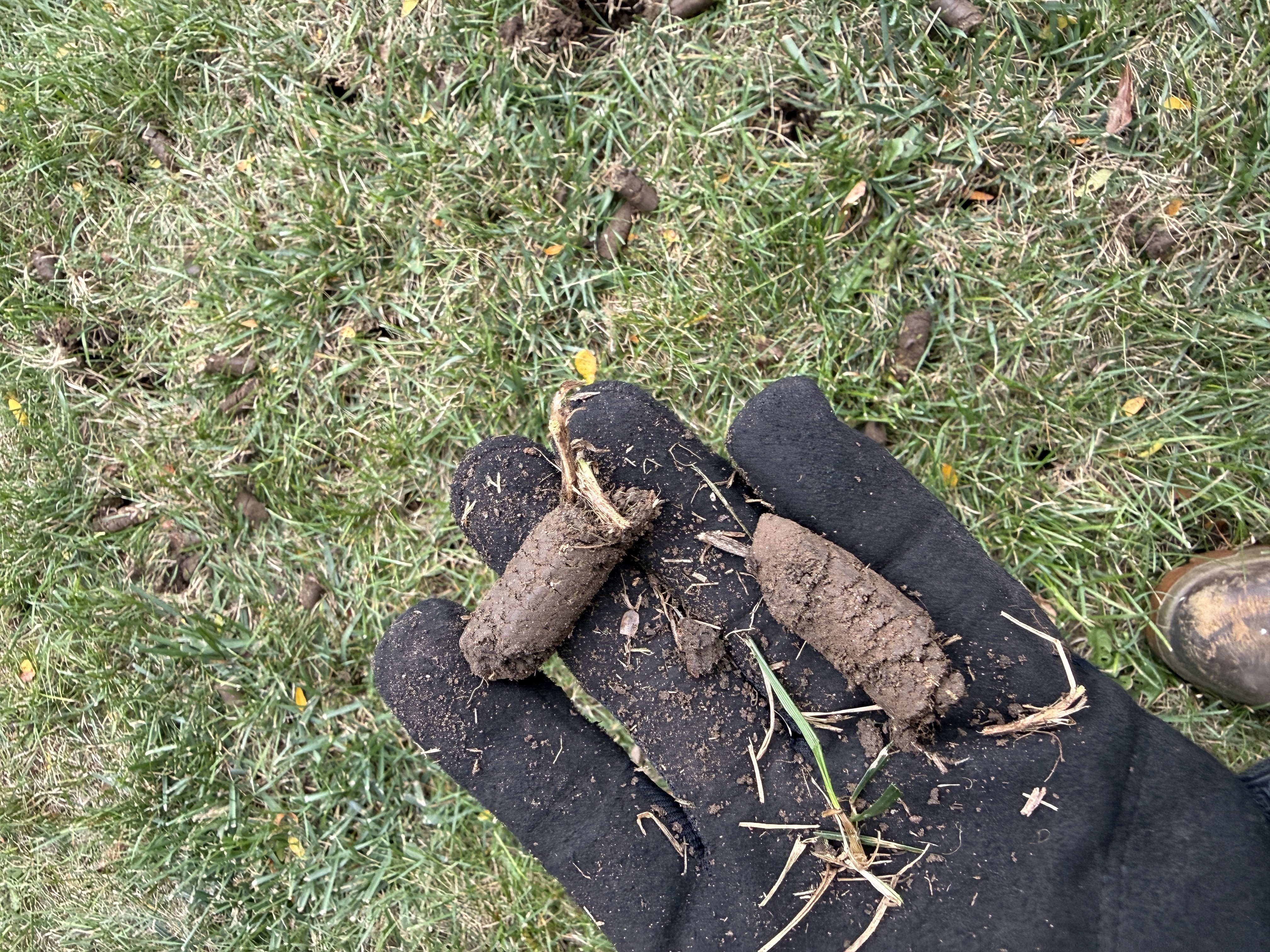
Core aeration is the process of mechanically removing small plugs, or cores, of soil from a lawn. An aerator travels across the yard using hollow tines that penetrate the ground and pull small sections of soil out of the lawn.
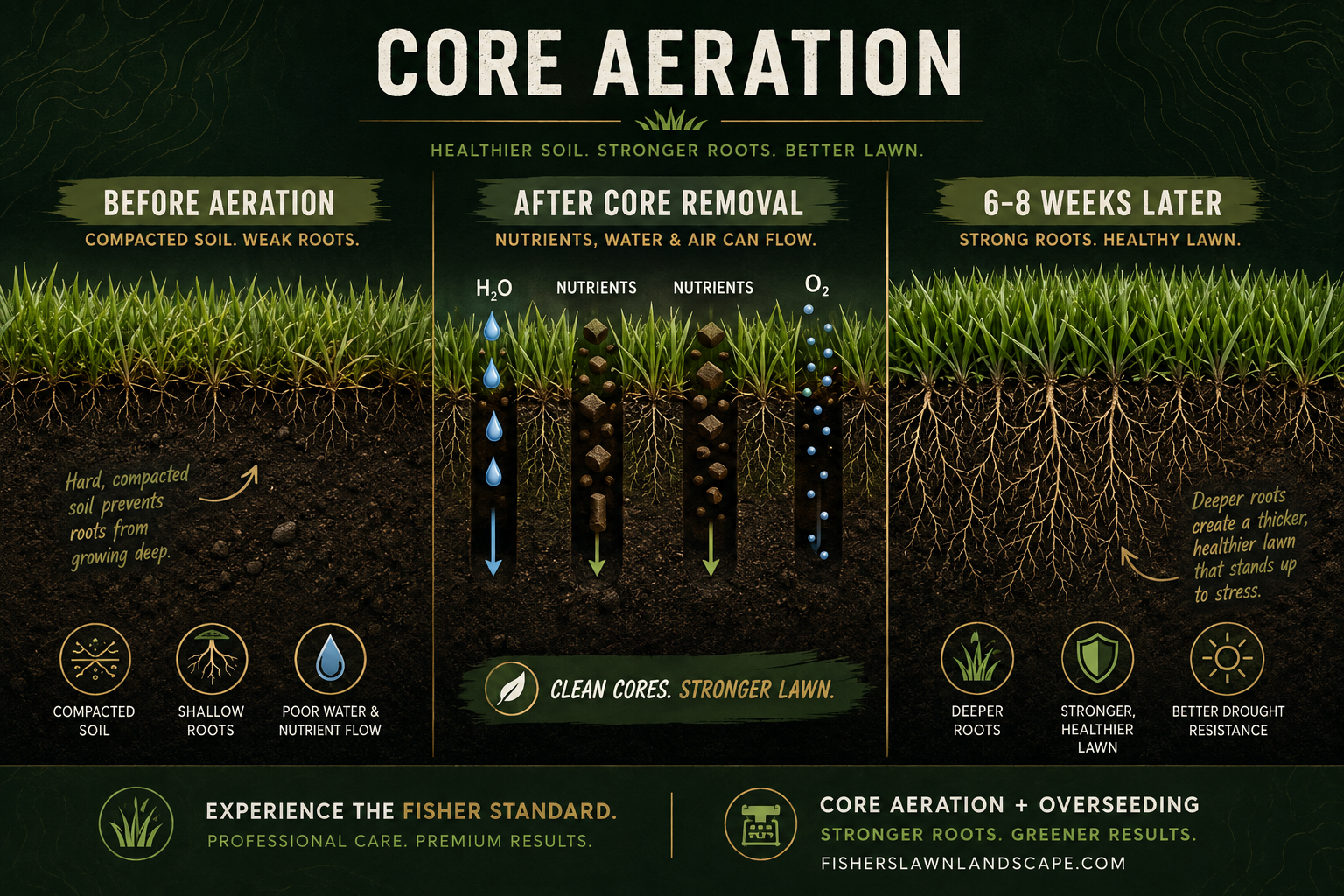
These openings create additional space inside the soil and allow air, water, and nutrients to move deeper into the root zone. Instead of everything remaining near the surface, the lawn gets better access to the resources it needs where they matter most.
Why Does Soil Become Compacted?
Soil naturally becomes compacted over time. Walking across the lawn, kids playing outside, pets running through the yard, mowing equipment, and other lawn traffic all contribute to soil compaction.
When soil becomes too compacted, there is less space between soil particles. That makes it harder for water, oxygen, and nutrients to reach the roots of the grass.
Compacted soil can also make it difficult for grass roots to grow deeper. Instead, roots may remain shallow near the surface, which can make the lawn more vulnerable to heat, drought, and other stressful conditions.
Core aeration creates room inside compacted soil so grass roots can access more water, oxygen, and nutrients while developing a stronger root system.
How Does Core Aeration Work?
During core aeration, a machine passes across the lawn and repeatedly inserts hollow tines into the soil. Each tine pulls out a small plug of soil and leaves an opening behind.
Thousands of these openings can be created throughout the lawn. This temporarily loosens the soil and improves movement between the surface of the lawn and the root zone below.
The soil cores that are left on top of the lawn should normally be left in place. They will naturally break down over time and return organic material back into the lawn.
Benefits of Core Aeration
Reduces Soil Compaction
Removing soil cores creates additional space inside the ground and helps relieve heavily compacted areas.
Improves Water Absorption
Aeration allows water to move deeper into the soil instead of remaining on the surface or running off.
Improves Nutrient Access
Fertilizer and other nutrients have a better opportunity to reach the root zone through the openings created during aeration.
Encourages Deeper Roots
Looser soil gives grass roots more room to expand, helping create a stronger and more resilient lawn.
Improves Air Exchange
Oxygen can move into the soil more easily, creating a healthier environment for the lawn's root system.
Helps Prepare for Overseeding
Aeration creates excellent conditions for overseeding because grass seed has additional opportunities to make direct contact with the soil.
Why Aeration and Overseeding Work Well Together
Core aeration and overseeding are commonly completed together because the aeration process creates an ideal environment for new grass seed.
Seed that simply sits on top of an established lawn may struggle to reach the soil. After aeration, some of that seed can settle around or inside the newly created openings, improving seed-to-soil contact.
Overseeding can help fill thin areas, improve overall turf density, and introduce new grass growth into an existing lawn. When paired with core aeration, it can be one of the most effective ways to improve a lawn going into the next growing season.
When Should a Lawn Be Aerated?
For cool-season lawns commonly found throughout Northern Illinois, late summer and early fall are excellent times for core aeration and overseeding.
During this period, soil temperatures are still warm enough to support seed germination while cooler air temperatures help reduce stress on newly developing grass.
The exact timing can vary depending on weather conditions, lawn condition, soil moisture, and the type of grass growing in the yard.
Does Every Lawn Need Core Aeration?
Not every lawn experiences the same amount of compaction, but many residential lawns can benefit from periodic aeration. Lawns that receive frequent foot traffic, have heavy clay soil, experience standing water, or struggle with thin grass may benefit even more.
If the ground feels extremely hard, water has difficulty soaking into the lawn, or the grass struggles even with proper watering and fertilization, soil compaction may be part of the problem.
Core Aeration & Overseeding Is Now Booking
Give your lawn the opportunity to build stronger roots, improve soil conditions, and establish thicker turf. Fisher's Lawn and Landscape is now scheduling core aeration and overseeding services.